Newsletter Subscribe
Enter your email address below and subscribe to our newsletter
Enter your email address below and subscribe to our newsletter

 ByJohn A
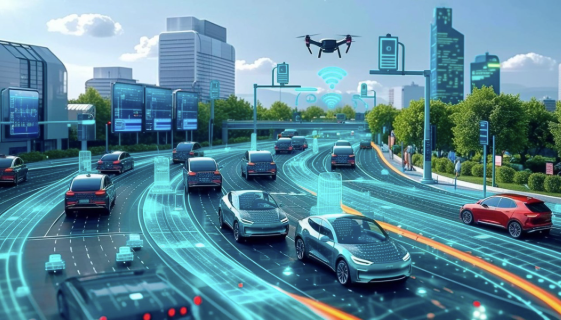
AI-driven traffic management integrates real-time streams, predictive models, and optimization engines to shape urban flow. Data from cameras, sensors, and connected devices feeds adaptive signaling and incident response, while fusion supports granular safety insights. Governance and ethics frame accountable choices, with measurable gains in predictability and throughput. Yet interoperability, validation, and pathway trade-offs remain, inviting further scrutiny as cities scale and policies evolve. The next step lies in balancing precision with resilience across diverse corridors.
AI-driven traffic management today integrates real-time data streams, predictive analytics, and optimization algorithms to orchestrate urban mobility. Systems monitor intersections, corridors, and corridors’ energy use, translating signals into scalable flows. The approach emphasizes AI governance and data ethics, ensuring transparency, accountability, and accountable decision-making. Outcomes favor freedom through predictable travel, modular integration, and adaptable control that respects privacy and stakeholder trust.
Real-time data streams—from camera feeds, connected vehicles, and sensor networks—provide a granular view of city traffic dynamics, enabling immediate safety interventions and longer-term risk reduction.
Data fusion integrates heterogeneous inputs to yield actionable insights, supporting adaptive signaling, incident response, and resource allocation.
However, ethics risk and governance considerations must accompany optimization, ensuring transparency, accountability, and equitable safety benefits for all road users.
Crowdsourced routing complements corridor analytics, while drone surveillance enhances situational awareness. Integrated pipelines enable proactive control, resilient networks, and adaptive planning for freedom-loving, efficiency-seeking jurisdictions.
Evaluating impact in AI-assisted traffic management requires a metrics-driven framework that links system inputs to performance outcomes. The analysis adopts a data-driven, systems-oriented lens, clarifying metrics for reliability, latency, and throughput while isolating causal effects. Challenges include privacy concerns, data governance, and interoperability.
Implementation paths emphasize modular deployment, rigorous validation, governance, and adaptive optimization to sustain measurable, scalable improvements.
AI systems protect privacy through robust privacy controls and rigorous data governance, enabling anonymization, access auditing, and minimization; metrics quantify risk, while modular pipelines optimize compliance, transparency, and freedom to innovate without compromising user data integrity.
The cost of deployment varies by scope, but typically centers on hardware, software, and integration: estimated total, annualized, ranges widely. ROI metrics focus on throughput gains, congestion reduction, and energy savings, optimizing capital expenditure and long‑term operational benefits.
AI replacement of human operators is unlikely; systems show partial automation with safety gains, not full substitution. Operators remain essential for edge cases, incident judgment, and adaptability, while AI enhances safety and efficiency through enhanced, data-driven coordination.
Data bias is mitigated through targeted sampling, representative datasets, and ongoing fairness audits. Bias mitigation uses cross-validation, explainable metrics, and continuous monitoring; systems optimize data pipelines to minimize variance, ensuring equitable performance while preserving operational freedom and transparency.
See also: hadlog
The staff require data governance literacy, statistical literacy, and governance processes to manage AI, including risk assessment, model monitoring, and compliance. Ethical risk awareness and cross-disciplinary collaboration enable optimization, resilience, and freedom through accountable, transparent, data-driven systems.
In sum, AI-driven traffic management is a systems optimization problem, balancing streams of data, control signals, and predictive models to maximize throughput and reliability. A single incident—an unexpected lane block—triggers a calibrated cascade: real-time re-timing, adaptive phasing, and rerouted corridors, all orchestrated by fused sensors and vehicle data. The result is a measurable lift in travel predictability, with continuous feedback looping to refine models, interoperate across agencies, and sustain safer, smoother streets.